
History of Sinai Hospital
? Did you know that Sinai Hospital is the oldest hospital in Iran
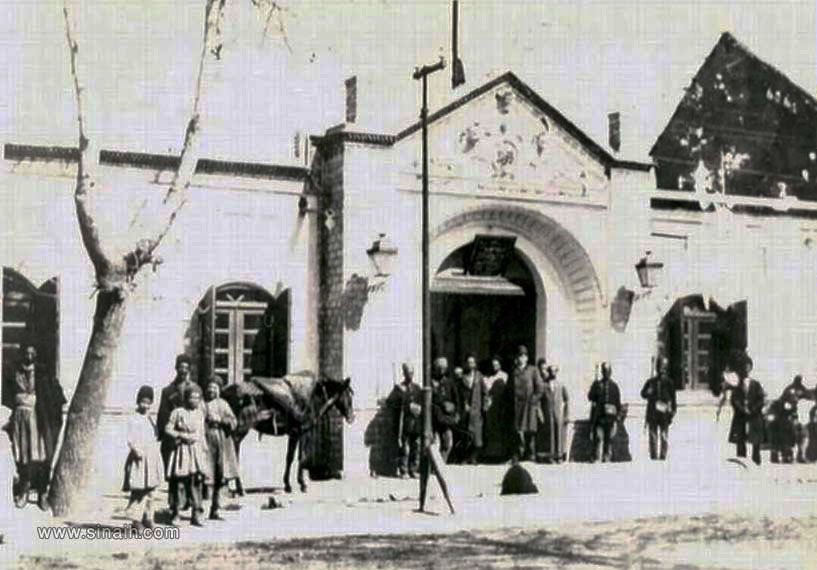 Until the time of Naser al-Din Shah Qajar, there was no such thig as a hospital or sick house, and patients were treated by Hakim Bashis. Until Naser al-Din Shah Qajar returned from his first European trip in 1290 AH (1873 AD), while being heavily influenced by European industrial developments, he ordered the construction of a hospital in the style of European hospitals. In 1251 A.H., this task was carried out by Nazem-ul-Atba Nafisi, and thus the first hospital in Iran was created and was called "Government Hospital". At the same time, a branch called Medicine was opened in Dar al-Funun School and it was decided that medical students would use the government hospital for their education, as several times a week Dar al-Funun medical students would go to the government hospital with their professors and stay in the rooms Patients were hospitalized and received practical training.
The "Government Hospital" with 400 beds and three separate buildings was established on Imam Khomeini Street (Sephe) not reaching Hasan Abad Square (Eight Domes). According to the documents available in one of the hospital buildings, more than 2,500 patients were treated in the first year of establishment.
During the reign of Muzaffar al-Din Shah, the first reconstruction and organization of the hospital was done by the Germans, and the remaining buildings of this hospital have retained their German structure, and over the years, various other departments were added to this hospital. Between the reign of Pahlavi I and Pahlavi II, this hospital was equipped with departments of internal medicine, surgery, urology, radiology, ophthalmology, dentistry, ear, nose and throat, and dermatology. This hospital continued to work under the name of the government hospital until 1319, and in that year, in order to honor and appreciate the father of Iranian medicine, Abu Ali Sina, the name "Sina" was replaced by the government hospital, which is still operating under the same name. Is.
After 1319, major changes were made in Sinai Hospital, and the hospital was annexed to the Faculty of Medicine of Tehran University, and in the 40s, under the chairmanship of Professor Adel, who had just returned from France, various other medical departments were added to the buildings. Professor Adel's presidency was the beginning for the advancement of surgery in the country. While training professors and great surgeons, he sent them to the cities. In the early 50s, neurosurgery, heart surgery, dialysis and orthopedic departments were gradually added to the hospital complex. After the victory of the Islamic Revolution, this hospital expanded to Si Tir Street (Qawam al-Sultaneh) and two buildings were added to the three main buildings that were standing from the beginning.
History of the surgery department of Sinaba hospital, written by Dr. Abdulhamid Hasabi
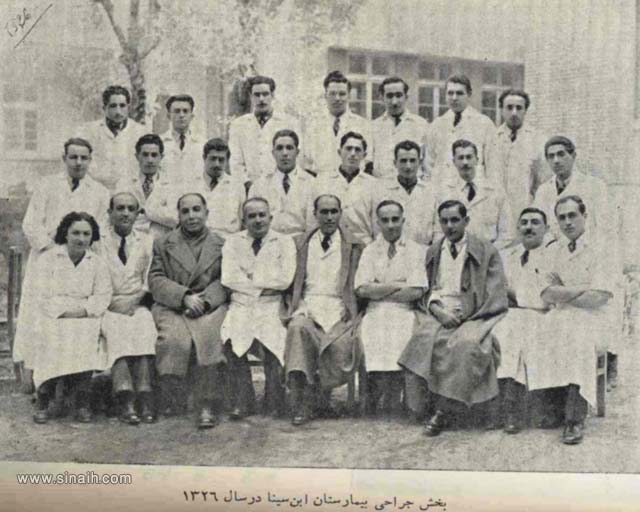
The book of history is always sweet, exciting and instructive if it is correct, and the history of surgery also has its own mood for interested surgeons.
Many professors of surgery also insist that students must read and remember the history of each disease they study. The history of Iran's surgery, especially in the current century, is a short book, most of which takes place in Sinai Hospital. So let's turn the pages of this history together.
In 1290 AH, when Naseruddin Shah returned from his trip to Farangistan, he ordered to establish a hospital in the style of hospitals in foreign countries. Chancellor Moshir al-Doulah and Ali Qoli Mirza Itzad al-Sultaneh, Minister of Science, worked hard to complete this task, and in 1293 AH, the desired hospital was established, which was named the government hospital.
From the beginning of its establishment until 1298 AH, it was headed by Dr. Ali Akbar Khan Nafisi - medical director. And Dr. Mohammad Khan Kermanshahi, known as Dr. "Kafari", took over the presidency of the hospital. Dr. Kermanshahi first studied a course of medicine at Dar al-Funun school and then continued his studies abroad and was an expert in various fields of medicine and performed surgery during his tenure as president of the state hospital.
In 1304, Mirza Abulhasan Khan Bahrami, who had just returned from Farangistan, became the head of the hospital instead of Kermanshahi. In the year after 1312 AH, European doctors were gradually assigned to the hospital, and after Bahrami, Dr. Lof, then Dr. Kolnik, and then Dr. Ilberg became the head of Nael Hospital.
On the 13th of Aquarius (February), the headship of the hospital was entrusted to the late Dr. Mirza Zainul Abidin Khan Luqman Al Mamalek Hakim Bashi specially for the Shah.
At the end of 1296, Dr. Luqman Al-Mamalek died and Dr. Hasan Luqman Adham Hakim al-Doulah, his son, arrived at the hospital.
At this time, several English doctors were serving in the hospital, including Dr. Nelligan (physician and surgeon), Dr. Scott (surgeon), Dr. Welt, a surgeon who previously worked in the south, and Dr. Fretskiw, who was the colonel of the British forces in India.
At the same time, one of the famous surgeons of that time, named Dr. Hossein Khan Motamed, worked in the government hospital, who had studied surgery under the German Dr. Eilberg, and in the first two decades of our current century, he had a unique brilliance in the Iranian surgical scene, and for a while he was the head of the hospital. He was in charge of the surgery department of Sinai Hospital and Razi Hospital and was one of the first people to establish a private hospital in Sheikh Hadi Street. Dr. Motamed went to America at the age of fifty and it was said that at that age he was able to pass the necessary exams and pass.
In 1298, when Mr. Hakim al-Dawlah went to Europe in compliance with Ahmad Shah, the supervision of the hospital was entrusted to Mr. Abbasi Adham (Aalm al-Mulk).
In 1300 AD, the service of English doctors was terminated. In 1302, Dr. Saeed Malik (Lughman Al-Mulk) was appointed as the head of the surgery department. In 1313, Dr. Perto (Hakim Azam) was appointed as the head of the hospital, and after his death, the late Dr. Saeed Malik became the head of the hospital. Between 1300 and 1319 solar years, the government hospital had departments of internal medicine, surgery and urology, radiology, ophthalmology, dentistry, ear, nose, and throat, dermatology, and related clinics, but since 1319, after the government hospital joined the Faculty of Medicine of Tehran University, there were major changes. It was done and its internal, eye, ear, nose and throat departments were transferred to other hospitals, and the surgery and urology departments were also separated. Mr. Dr. Saeed Malik (Laqman Al-Mulk) became the head of the urology department, whose colleagues in the early years were Dr. Karim Motamed, Dr. Khalat Bari and Dr. Khabaratian.
And the head of the surgery department was entrusted to Mr. Adel, who had just returned from France and was elected to the chair of surgery and head of the surgery department of Sinai Hospital at the invitation of Professor Oberlin. And this was the beginning for the progress of surgery not only in Sinai Hospital and Medical School but also throughout Iran, because Professor Adel taught everything he knew to surgical candidates without hesitation and while training great masters, he also sent many surgeons to the cities after training, each of them He trained many students in many provincial centers. Among the famous surgeons who were trained in Professor Adl's school in the twenties and in turn became great professors, these people can be mentioned:
Dr. Abulqasem Najmabadi, Dr. Jahangir Vathouqi, Dr. Naini, Dr. Amirkia, Dr. Marashi, Dr. Wazirzadeh, Dr. Mohammad Hossein Mansour, Dr. Khodavardi Kiafar, Dr. Baqer Nasirpour, Dr. Afrasiab, Dr. Sadruddin Nabavi, Dr. Jahormi, Dr. Ahmed Falsafi, Dr. Qaragazlu and Dr. Amir Niromand and... the last four of these loved ones are still alive.
In 1328, the accident department of Sina Hospital was opened with a capacity of 150 beds, and due to the increase in the number of beds, Professor Adel divided the surgery department into 4 parts, which were known by the names of the department heads of each part: Najmabadi Department, Mansour Department, Kiafar Department, Nasirpur Department and Dr. Amir Kia was also in charge of a section called Orthopedic Department, but fractures and orthopedics were performed in all departments. Apart from these, the surgeons of the departments also performed all general surgeries, urology and gynecology, there were no restrictions, therefore, for many years, when the surgeons graduated from Sinai Hospital, they were experts in all these areas and also had courses on gynecology and obstetrics. They spent time in the women's hospital and the support of mothers.
Among the above-mentioned professors, Dr. Jahangir Voshoghi was first transferred to Goharshad Hasabi Hospital and then to Hazar Tokhtohobi Hospital and was chosen as the head of the surgery department there. Dr. Naini was appointed as the head of the otolaryngology department of Farabi Hospital.
Dr. Amir Niromand went to Isfahan, where he trained many surgeons during his years of service in that city. To complete the surgical information: Dr. Sadraldini Nabawi went to France, Dr. Afrasiab went to Germany, and Dr. Jahormi and Dr. Filasfi went to America. Mr. Dr. Qaraghezlou also became the head of Qom's Nakoi Hospital.
Since the mid-1930s, returning travelers from Sina Hospital were divided into five sections, the first section headed by Dr. Najmabadi and his colleagues, Dr. Vazirzadeh and Dr. Philasfi, the second section headed by Dr. Mohammad Hossein Mansour, the third section headed by Dr. Khodavardi Kiafar, the fourth section headed by Dr. Baqer Nasirpur, the surgical department of Panj, headed by Mr. Sadruddin Nabavi and Dr. Jahormi, was transferred to the urology department in the early 1940s due to the retirement of Dr. Luqman Al-Molk, which was divided into two departments, one of which was headed by Dr. Motamed and the second one by Dr. Jahormi. was managing In these years, renowned surgeons were trained in Sinai Hospital, who gradually took the place of the old professors in the surgical departments of not only Sinai and Tehran, but all cities, whose names are beyond the scope of this collection, and the biography of each of them will have a book.
After the revolution of 22 February 1357, unfortunately, many of these professors left the country and Sina Hospital underwent major changes, especially in the structural field, and the organization of the Imperial Organization and Social Services located on Qawam-ul-Sultaneh Street (3 Tir) was handed over to Sina Hospital, which by purchasing several The house was connected between the hospital and the organization.
It should be noted that until the early 1950s, there were only surgery and urology departments in Sina Hospital, but gradually, departments of neurosurgery, internal medicine, heart, dialysis, orthopedics, and in recent years, the department of endocrinology and internal medicine were added to the complex of Sina Hospital.
At the end of this chapter, it is necessary to emphasize that studying the history of this lesson allows us to encourage and interest the present-day surgeons of the country by respecting the veterans and the past and valuing their services and efforts.
Let's not forget that this interesting tradition, which many historians believe has gone from the East to the West, is currently more accepted by the Westerners than the Easterners, so that today, in this decade, our medical profession in the majority of foreign hospitals in the halls, libraries, corridors. And... you will often see the pictures of professors and seniors of that medical institution on the walls... Do you see pictures of its surgical elders in this Sinai hospital?
Let us end this article with a sentence from Dr. Mohsen Hashtroudi:
"The corpses of the past are the paving of the road for the future generation, so the old are guests of the world of the young, and the young build the roads of the future on the graves of the old"